MY TIET

Department of
Physics and Material Science

Major
Research
Areas

Main Image
Advanced Materials & Energy Technologies

Developing functional materials for sustainable energy, electronics, and next-generation technologies.

  • Materials Science
  • Thin-Film Solar Cells
  • Multiferroics
  • Fuel Cells
  • Functional Materials
Nuclear & Particle Physics

Advancing knowledge of atomic nuclei and fundamental particles while exploring applications in energy, medicine, and environmental science.

  • Experimental Nuclear Physics
  • Particle Physics
  • Environmental Radioactivity
Condensed Matter & Computational Physics

Understanding the fundamental behaviour of matter through experimental, theoretical, and computational approaches.
  • Experimental Condensed Matter Physics
  • Strongly Correlated Systems
  • Computational Soft Condensed Matter Physics
Main Image

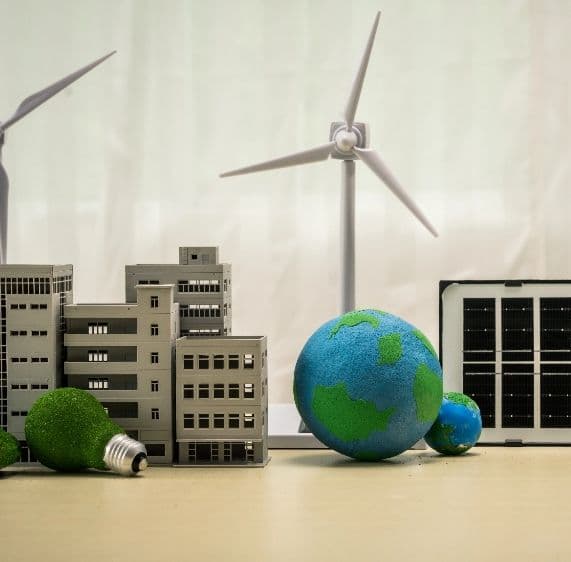
Energy and Environment Research at Thapar University

Research in the Department of Physics and Materials Science at Thapar Institute of Engineering & Technology is driven by the pursuit of fundamental scientific discovery and the development of advanced materials and technologies that address global challenges in energy, healthcare, electronics, environmental sustainability, and emerging technologies. The department fosters research across theoretical, computational, and experimental physics, creating an environment where scientific curiosity translates into meaningful innovation. Faculty members undertake research through sponsored projects, interdisciplinary collaborations, and partnerships with leading academic institutions, research organisations, government agencies, and industry. Supported by state-of-the-art laboratories and high-performance computational facilities, the department promotes scientific inquiry, technology development, high-quality publications, patents, and the training of doctoral scholars equipped to advance knowledge and solve complex scientific problems. Research increasingly integrates computational modelling, advanced characterisation techniques, nanotechnology, and functional materials to develop next-generation scientific and technological solutions.

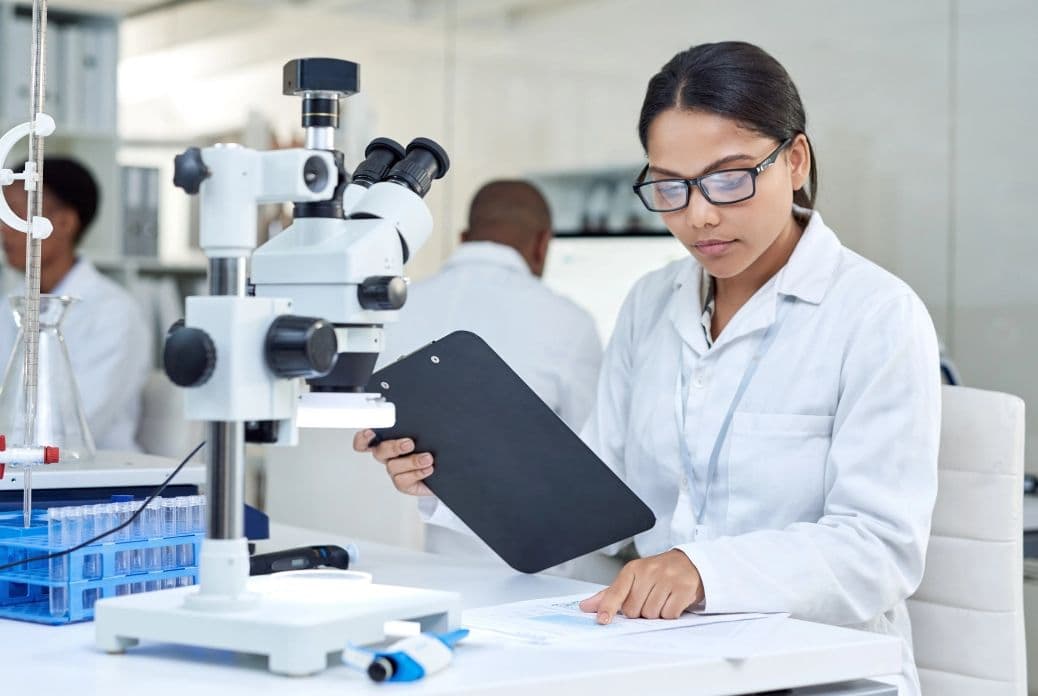
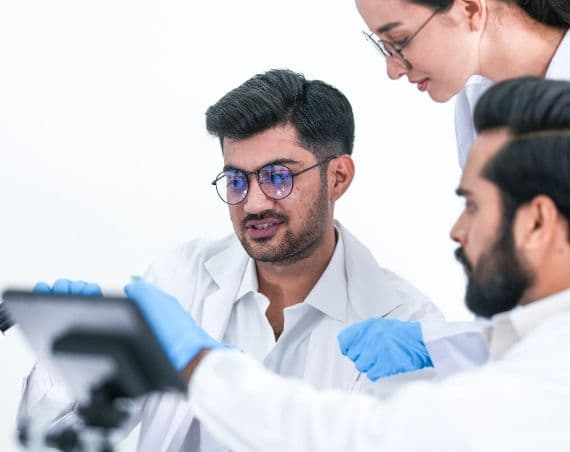
Collaborative Research and Lab Environment

The Department of Physics and Materials Science actively collaborates with universities, national laboratories, research organisations, government funding agencies, and industry partners in India and abroad. These collaborations foster sponsored research, interdisciplinary projects, technology development, faculty and student exchange, and access to advanced research infrastructure. Through strong national and international partnerships, the department continues to contribute to impactful scientific publications, intellectual property creation, and research that advances materials science, energy technologies, healthcare, electronics, and the fundamental understanding of the physical world.

Collaborative Research and
Lab Environment
Main Image
Research Infrastructure

The department houses advanced research laboratories and sophisticated scientific instrumentation that support both fundamental and interdisciplinary research across physics and materials science. These facilities enable students and researchers to investigate complex scientific phenomena, develop advanced materials, and translate scientific discoveries into practical technological applications.

Research is further strengthened by high-performance computational resources, advanced material synthesis and characterisation facilities, specialised laboratories for nuclear and condensed matter physics, and collaborative research environments that encourage innovation across disciplines.

Main Image

Thapar Institute of Engineering & Technology combines experience with new-age implementation.

Contact Us

P.O. Box 32, Bhadson Road, Patiala, Punjab, Pin -147004, India

Admissions helpline for all programs

Toll-free Number : 18002024100
Timings: 9 AM to 6 PM, Monday to Saturday
admission@thapar.edu